Why Creator Partnership Programs Stall, and the Operating Model That Keeps Them Selling

Creator partnership programs are becoming a crucial part of a brand’s success. As more and more brands carve out space for affiliate and creator commerce, many are finding that these programs are coming to a halt, and they’re not sure why.
With brands providing insights into their creator commerce, a common trend seems to be that creator partnership programs stall when brands recruit creators and then leave them alone. The programs that excel are the ones that are run with hands-on enablement, tiered rewards, and sales data both sides can see.
A creator partnership program pays creators, mostly through commission, gifted product, and paid campaigns, to promote a brand's products. Retailers like Macy's and thousands of smaller brands run them because more product discovery now happens in creator content.
A stalled program has a long roster, one flat commission rate, few of creators posting, and few growth opportunities. A program that keeps selling has active creators who get an intuitive platform, coaching, a higher tier to reach, and clear numbers on what they share and sell.
Why do creator partnership programs stall?
Most programs stall because brands put all of their effort into recruiting, and drop the ball on keeping creators active. Affiliate links or codes appear in close to a third of brand collaborations with creators, according to Modash's October 2026 creator survey, so a stalled program costs real sales in creator commerce.
Modash's 2026 Effort Gap report found that 60% of marketers call keeping affiliates active their biggest challenge, and over a third have fewer than 20% of affiliates posting even once a month. The causes repeat:
- Hands-off management: Very involved brands had 71.5% of affiliates active, while very hands-off brands had 10%
- One-way communication: Only half of marketers use any one-to-many channel, like a newsletter, and 44.6% contact affiliates just once a month
- Flat commission: Over half run a single tier, which averages 37% active affiliates, compared with close to 50% for programs with three or more tiers
How Macy's keeps its Style Crew posting
Macy's Style Crew shows what a program that doesn't stall looks like. The roughly 600-member program has nearly every creator posting almost every month, and posts grew 9,000% in a single year, Modern Retail reported. Macy's isn't chasing headcount, either. Rather than grow to 10,000 creators, it's focused on managing a community and building real relationships. Macy's keeps that momentum with regular creator briefings and monthly challenges.
The storefront layer runs on Anchor by Motom. In 2025, Macy's opened storefronts to every Style Crew member, and creators curate them around their own expertise and occasions like the holidays. Macy's also brought those storefronts to shoppers offline, through QR codes in holiday catalogs and in-person events where top creators brought their storefronts to life. Creator storefront sales grew 478% year over year.
What successful creator partnership programs do differently
Creator partnership programs that grow are ones that treat creators as long-term partners.
In our experience at Motom, most inactive creators are stuck rather than uninterested. A short video walkthrough of the platform and a one-page summary of the creator's link, code, and commission go a long way. Creators who post, see no results, and hear nothing from the brand move on. When creators can see their own clicks, conversions, and commissions in one place, they post, see the outcome, and post again.
Modash’s guidance to brands is to audit the existing activation rate before running another recruiting drive. One way to build that momentum is to over-reward early milestones, such as a bonus on a new creator's first sale, because creators who see no early result are the most likely to lapse.
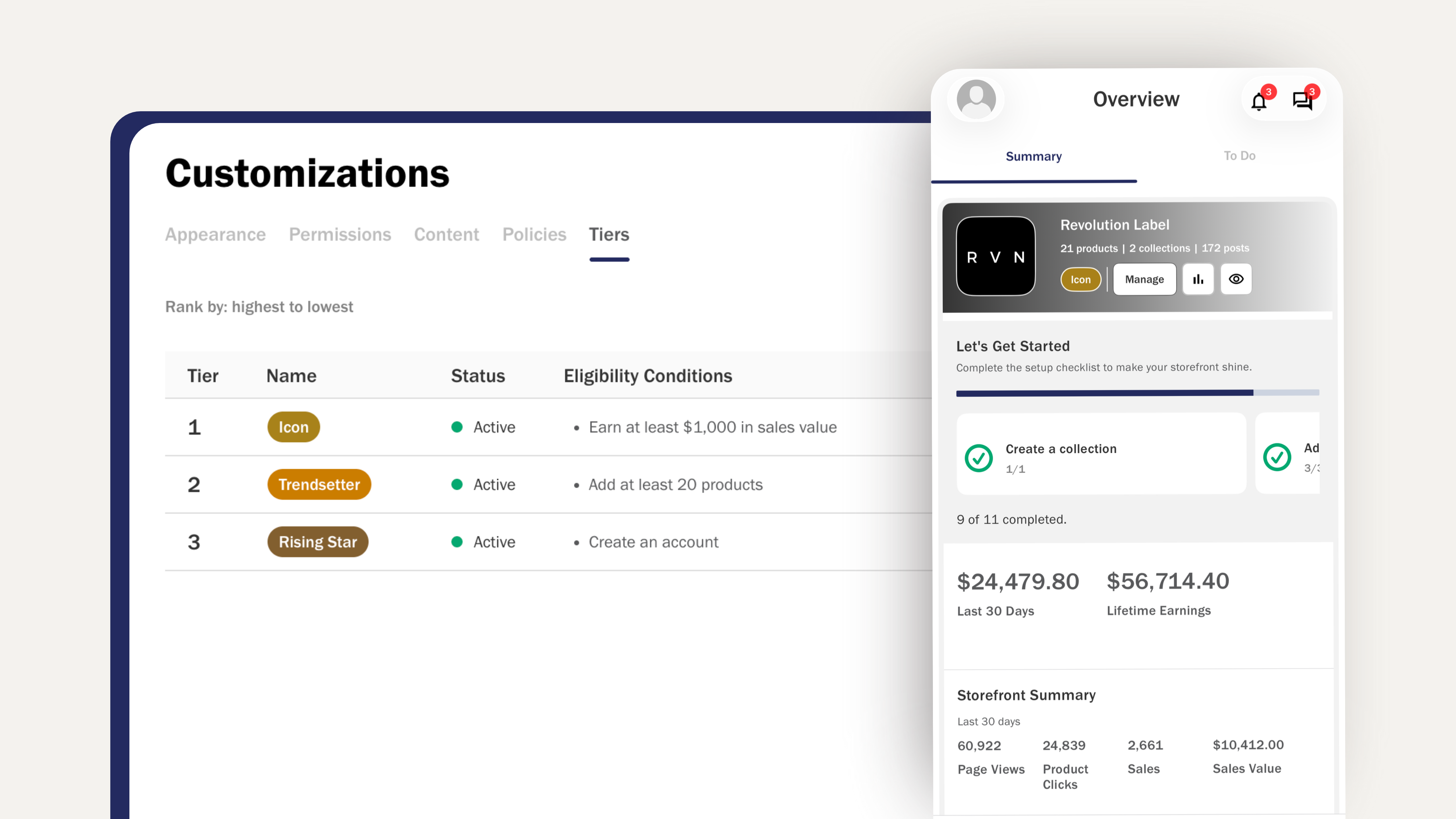
Tiers built into a creator program can also give brands more insight into the KPIs that matter. Creators in a pure affiliate program disengage quickly when they don't see results, while tiers and badges give creators reasons to stay active beyond commission. The more content you make or sales you generate, the more you benefit, whether that’s bonus payments, gifting, or exclusive opportunities with the brand.
The operating models that keep creator partnership programs selling
- Retention over volume: Track the share of creators posting each month and continue engaging past top sellers and new sign-ups with incentives and opportunities.
- Hands-on activation and enablement: Give creators an onboarding kit, a two-way community channel, monthly challenges, and notes on what converts. Training has the clearest payoff: Motom's trained creators saw 223% higher engagement and 119% higher sales than before.
- Tiered incentives: Set a base rate, a middle tier unlocked by a sales or posting threshold, and a top tier for consistent performers. Attach exclusive opportunities, like paid campaigns, to each tier to motivate creators to stay consistent.
- Creator and brand-level attribution on owned infrastructure: Creators need their own sales data to keep posting, and brands need data by creator, product, and campaign to decide where to invest. When a program runs entirely on a third-party marketplace, the shopper relationship and much of that data sit with the platform rather than the brand. Anchor by Motom’s storefronts sit on the brand's side, so brands and creators own their data and can see what is actually selling.
How brands and creators benefit
Brands get steadier sales from a smaller group of active creators, spend less on constant recruiting, and build a record of creator performance they own. Creators get income they can plan around, fresh product to talk about, coaching that improves their results, and a clear path to higher commission and paid work.
Both sides gain from the same habits: regular contact, visible results, and rewards that grow with performance. Creator partnership programs built on those habits stay active long after launch, and they keep selling.