The Case for Brand-Owned Creator Commerce In a Fragmented Shopping Landscape
Shoppers rarely follow one path to a purchase anymore. A single product might be discovered in a TikTok video, compared on Amazon and recommended by ChatGPT before anyone clicks buy. With shopper data spread across so many platforms and websites, how are brands keeping track of their consumers? The answer seems to lie with creator commerce.
Creators appear at nearly every stop on a customer’s path to purchase. As shopping splinters across social platforms, marketplaces and AI search, they are one of the few constants a brand can build around. Brand-owned creator commerce gives a brand one home for creator relationships, sales data and the shopping experience, no matter where a shopper started.
In 2025, Macy's grew revenue from its in-house creator program by 315%, while brands that depended on TikTok Shop spent that January scrambling for backup plans. What separated those outcomes was ownership.
What Brand-Owned Creator Commerce Means
Creator commerce is creators selling products through shoppable content, affiliate links and storefronts. Brand-owned creator commerce means the brand runs that program on infrastructure it controls. A brand can own five parts of it.
- The creator relationship. Recruiting, contracts and communication stay with the brand.
- The shopping destination. Creator storefronts and links send shoppers to the brand's own site.
- Creator-level performance data. Clicks, orders, revenue and average order value are tied to each creator.
- Customer data. Every creator-driven purchase becomes a first-party customer record.
- Program terms. The brand sets commissions, tiers, gifting and payouts.
An owned program works alongside the social platforms a brand already uses, so performance from every channel lands in one record.
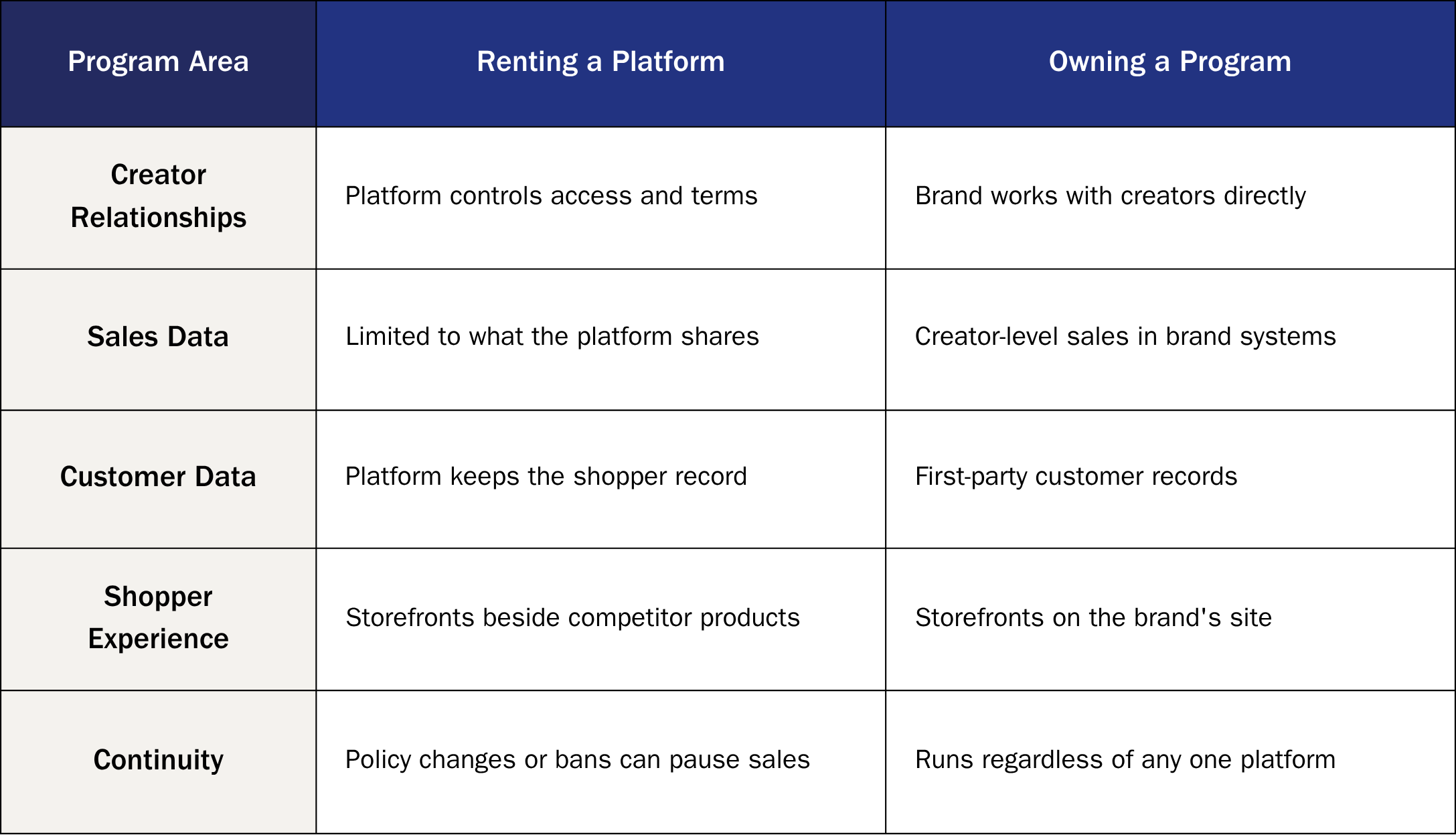
Renting vs. Owning
Why Owning Creator Commerce Data Matters
Creator programs are more uneven than most budgets assume. Across Motom's retailer and brand programs, the top 10% of creators drive more than 70% of the creator program revenue. A brand can only find that top 10% if it sees sales by individual creator, which is hard when each platform has its own dashboard.
Spending on the creators who sell. Motom recommends selecting creators "based on full-funnel performance data including sales attribution," then sending paid traffic to their storefronts. In Motom's programs, that produced an 86% increase in conversion rate and a 91% increase in click-through rate.
Rewarding top performers. Owned data lets a brand tier creators by results and reward its best sellers with higher commissions, early access or flat-fee deals.
Keeping one record as shopping splinters. A shopper might find a product on Instagram, check a marketplace and ask an AI assistant before buying. When creator links route to the brand's site, the brand keeps centralized reporting and creator-level attribution across every experience.
Renting vs. Owning In Practice: TikTok Shop and Macy's Style Crew
Renting: Brands that depend on TikTok Shop
On January 19, 2025, TikTok went dark in the U.S. for about 12 hours, cutting off more than 170 million American users. Modern Retail reported sellers rushing to put backup plans in place. Brands selling mainly through TikTok Shop had no say in the outcome, because their creator relationships and sales history lived on someone else's platform.
Owning: Macy's Style Crew
Macy's Style Crew has grown from about 20 employee ambassadors in 2017 to more than 600 creators. Macy's runs it in-house with CJ and Motom technology for its storefronts, and in 2025 reported 30% to 40% conversion growth among top creators, a 315% increase in revenue and a 327% increase in traffic. Its creators can post anywhere and still send shoppers to Macy's.
How To Get Started With Brand-Owned Creator Commerce
- Map where creator sales happen today and what data each platform gives you.
- Decide which data you need to own, starting with creator-level clicks, orders, revenue and returns.
- Move the shopping destination to your site with creator storefronts or links on your domain.
- Set your own program terms for commissions, tiers, gifting and flat fees.
- Review creator performance monthly and shift budget toward top sellers.
Motom built Anchor, its white-label creator commerce platform, for brands and retailers that want to own and run their creator program themselves. Anchor is hosted on your brand’s own domain and brings together branded creator storefronts, Creator Links accounts, Creator Tiers, and paid and gifting partnerships. The storefronts, creator relationships, first-party data, and revenue stay with your brand, and every creator investment ties back to attributed sales.
If you are planning a new creator program or rethinking an existing one, book a working session with the Motom team to see how Anchor fits alongside your current platforms.